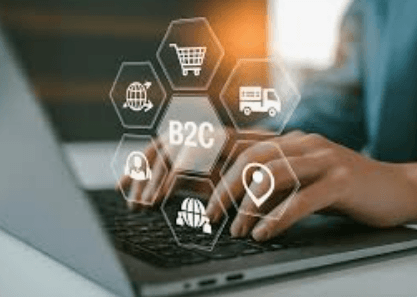

The future of e-commerce tech rests on personalization, omnichannel fluency, and real-time data flows. Platforms will increasingly rely on AI, automation, and predictive analytics to optimize inventory, logistics, and demand. Voice interfaces and seamless, cross-device payments will reshape discovery and checkout. Governance, privacy, and data portability will anchor collaboration across partners. Sustainable, secure innovation will require transparent metrics and controlled experimentation, inviting firms to mobilize faster yet more responsibly as competition intensifies. The question is where these shifts converge next.
What’s Driving E‑Commerce Tech Now
The current drivers of e-commerce technology are converging around personalisation, operational efficiency, and seamless omnichannel experiences.
Analysts note accelerating investments in cloud platforms, AI-driven insights, and modular architectures that enable rapid experimentation.
Data privacy and data portability emerge as essential guardrails, shaping governance and cross‑border collaboration while preserving user trust.
Forward momentum hinges on transparent standards, scalable tooling, and adaptable, freedom‑oriented strategies.
Personalization, Voice, and Seamless Checkout
Personalization, voice interfaces, and seamless checkout are converging as core levers of e-commerce differentiation: data-driven insights enable real-time tailoring, natural-language interactions reduce friction, and frictionless payment flows boost conversion across devices.
The evolution emphasizes personalization strategies and scalable personalization architectures, while voice enabled shopping expands discovery and support.
Firms test omnichannel pathways, measure lift via controlled experiments, and pursue speed, trust, and freedom for users navigating complex catalogs.
AI, Automation, and Predictive Analytics in Operations
AI, automation, and predictive analytics are reshaping operations across e-commerce by turning real-time data into actionable workflows. Data-driven insights optimize inventory, logistics, and demand forecasting while reducing waste and latency.
Organizations pursue flexible, scalable platforms and transparent processes. Emphasizing ai ethics and automation governance, they balance experimentation with safeguards, enabling rapid iteration without compromising accountability or customer trust.
Sustainable, Secure, and Ethical Innovation in Retail
Sustainable packaging, ethical sourcing, secure payments, and data privacy shape risk, trust, and growth. Enterprises leverage measurable metrics to balance innovation with accountability, enabling resilient, freedom-driven market expansion.
Frequently Asked Questions
How Will AR Impact Online Shopping Adoption in the Next Decade?
AR adoption will accelerate online shopping by enhancing product visualization, reducing uncertainty, and personalizing experiences; studies project incremental lift in conversion and repeat visits as consumers gain trust and freedom to explore transformative experiences.
What Role Will Blockchain Play in Supply Chain Transparency?
Blockchain enhances supply chain transparency by immutably recording provenance, improving traceability, and enabling real-time verification. It presents blockchain benefits in risk reduction and efficiency, while supply chaincrypto integration accelerates data sharing, auditing, and compliance for forward-looking, freedom-seeking stakeholders.
Can Digital Twins Optimize Warehouse and Fulfillment Accuracy?
Like a compass guiding ships, digital twins optimize warehouse operations by simulating flows and validating decisions, enabling real-time adjustments. This approach improves warehouse optimization, reduces errors, and supports data-driven, forward-looking strategies for scalable, freedom-minded fulfillment.
See also: The Future of Green Technology and Sustainability
How Will 5G Influence Real-Time Customer Experiences?
5G latency enables near-instantaneous interactions, boosting real-time AR impact and hyper personalization while costs normalize. Edge computing and digital twins drive warehouse optimization; blockchain transparency enhances supply chain trust, supporting data-driven decisions.
What Are the Costs of Implementing Hyper-Personalization at Scale?
The costs of implementing hyper-personalization at scale hinge on robust cost modeling and ongoing personalization governance, enabling scalable investment decisions while balancing accuracy, data coverage, and privacy; projections indicate gradually decreasing unit costs due to automation and standardization.
Conclusion
The evolution of e-commerce tech unfolds as a tightly interlocked system: real-time data, AI-driven optimization, and omnichannel experiences converge to reduce friction and heighten relevance. As operators deploy modular platforms, cloud governance and transparent privacy remain non-negotiables, anchoring trust while enabling rapid experimentation. The net effect is a moving target of measurable gains—efficiency, conversion, and resilience—driven by voice-enabled discovery and data portability. In this landscape, innovation hazards become opportunities, like a compass pointing toward sustained, responsible growth. Metonymy device: “data” as the engine.